Sleep Sack to Duvet: What Changes and What to Buy
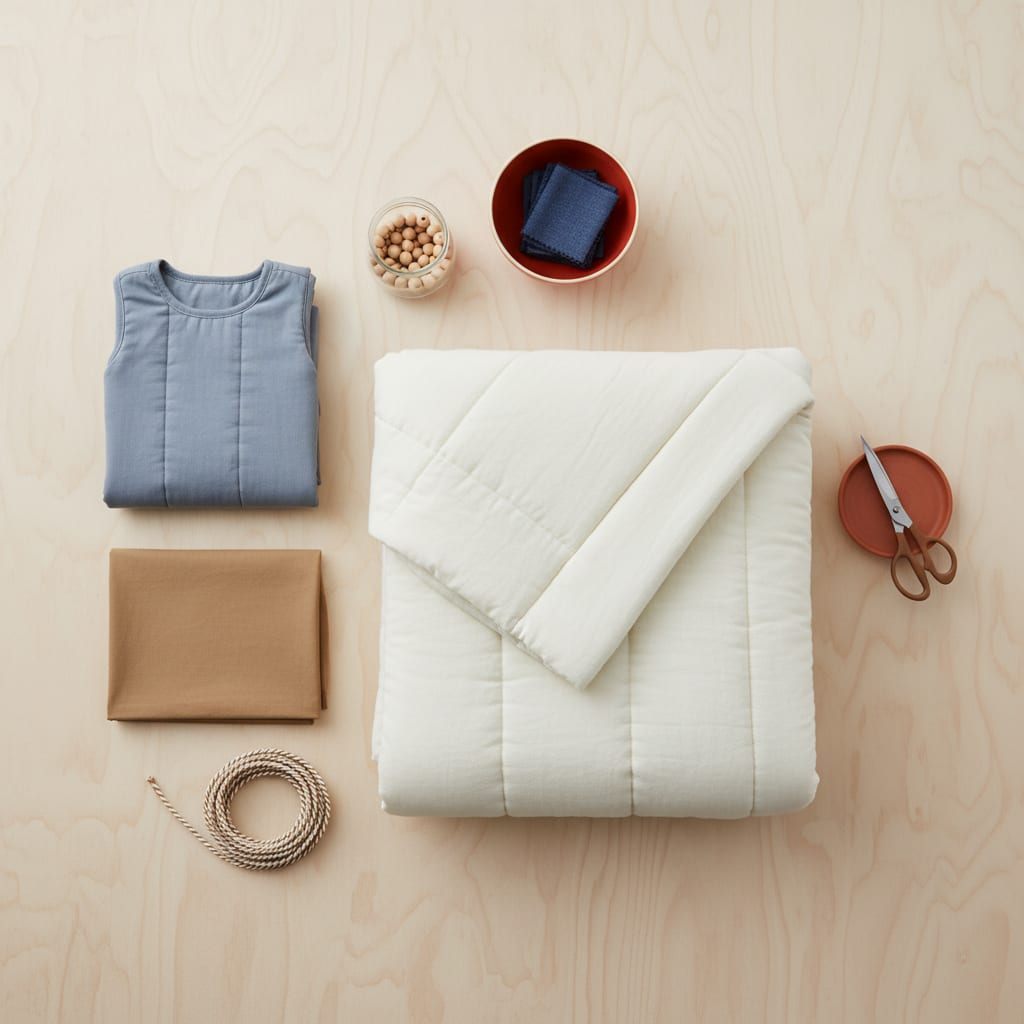
Nothing loose goes in the sleep space before 12 months — that part isn’t negotiable and nothing below bends it. After that, the honest answer to “when do we move from a sleep sack to a duvet?” is that it usually isn’t a bedding decision at all. It’s a bed decision. A comforter belongs to a toddler bed, not a crib, and families who switch early tend to switch twice. What changes on the other side: temperature stops being automatic, the child stops being contained, and the laundry doubles. Timed right, the cost is close to nothing.
Duvet, comforter, quilt — same question here, because the safety and the shopping work out identically.
The line that doesn’t move AAP guidance, verified August 2026
The American Academy of Pediatrics’ safe sleep guidance is explicit that loose items in the sleep space “can increase your baby’s risk of entrapment, suffocation or strangulation,” and states plainly that “unless mentioned otherwise, all these recommendations are for babies up to 1 year of age.” The CPSC’s crib safety tips say the same thing in product terms: “Do not put pillows, quilts, comforters, sheepskins, pillow-like bumper pads or pillow-like stuffed toys in the crib.” Its suggested substitute is a wearable blanket — “consider using a sleeper instead of a blanket.”
So the earliest date on the calendar is the first birthday, and plenty of pediatric sleep people would hold longer. If you’re still working out the timeline before that, the full bedding-by-age version is here: when a baby can sleep with a blanket.
Why this is really a crib question
Here’s the part nobody frames properly. The trigger most families are actually waiting for isn’t 12 months — it’s the crib running out.
The AAP’s room-safety guidance puts the exit at a measurement: “move your child to another bed when he is 35 inches (89 cm) tall, or when the height of the side rail is less than three-quarters of his height (approximately nipple level).” Its separate big-kid-bed page adds the behavioral trigger: “once your toddler can climb out of their crib, it may be time to transition.” Verified August 2026
Put a folded comforter in a crib with a climber and you have handed them a step. That’s the practical reason a duvet and a crib are a poor pairing even after the first birthday, and it’s why the sensible sequence is sack → toddler bed → duvet, rather than sack → duvet → panic.
The sizing quietly agrees. The largest size HALO lists for its cotton SleepSack is X-Large, 18–24 months — the wearable-blanket aisle simply stops around the age the crib does. Betteroo’s roundup of what’s left in the toddler sleep sack aisle is a fair map of that shrinking shelf, and their write-up on when a toddler bed actually makes sense covers the timing side.
Four things that change the first night
Temperature stops being automatic. A sleep sack is a fixed, unremovable layer with a number on it — HALO’s cotton SleepSack is rated TOG 0.5, which the listing pairs with a room around 72–75°F. A duvet is a variable layer, because a toddler kicks it off at 1am and does not put it back. The fix is to dress the room and the child rather than the bed: the AAP’s rule of thumb is that a baby “only needs one more layer than you would wear in the same environment.” Warmer pajamas, cooler room, and stop expecting the comforter to do a job it can’t do while it’s on the floor.
They can get out. The sack was a mild restraint you didn’t know you were relying on. Removing it and removing the crib rails in the same week is how you get three weeks of a child appearing silently beside your bed. Change one thing at a time.
The duvet becomes a comfort object, which means it has to survive a stomach bug at 2am. Buy two cheap ones rather than one nice one — that single decision saves more money and more nights than anything else on this page. Laundry roughly doubles too: a sack was one washable item, a bed is a sheet plus a cover plus whatever hit the floor.
What carries over free (this is the real saving)
Your crib sheets still fit. A toddler bed takes the crib mattress. The CPSC requires a full-size crib mattress to be “at least 27 and ¼ inches in width by 51 and ¼ inches in length”; Simmons Kids’ dual-sided Quiet Nights mattress, $63.99 on Delta Children’s site today, measures 27.5 x 52 x 5 inches and says on its own page that you “flip the mattress when it comes time for your baby to move from the crib to a toddler bed — it’s specifically designed to fit any standard full-size crib and toddler bed.” Verified August 2026 So “toddler sheets” and “crib sheets” are the same sheets under two words, and the mattress you already own is the toddler mattress. Rebuy neither.
Comforters are one of the genuinely safe secondhand categories. They’re washable textiles with no recall history of the kind that dogs mattresses, sleepers and car seats. A Buy Nothing group moves toddler bedding constantly, because every household with a five-year-old has a dinosaur comforter nobody wants anymore. What I would never take used: mattresses, bumper pads (federally banned since the Safe Sleep for Babies Act of 2022), and anything weighted — the AAP’s registry-avoid list warns that “friends and family might offer you gently used or homemade versions of these products without knowing they could be dangerous.”
If you’re building the rest of the room around this, the free-first version is a sleep-friendly nursery on a freebies budget.
What I’d actually buy, and what I’d skip
Buy, if anything: a bigger sleep sack, which is the purchase most people should make instead of a duvet. The HALO SleepSack cotton wearable blanket in X-Large covers 18–24 months at TOG 0.5, and buys you the months between “too big for the medium” and “actually in a bed.” One item, one job, no floor.
Skip the toddler bed-in-a-bag sets — you are buying a flat sheet, a sham, a decorative pillow and a comforter in order to use the comforter. Skip weighted blankets outright: the CPSC’s guidance is “don’t use weighted blankets or weighted swaddles,” and the CDC’s position is that “weighted products such as weighted sleepers, weighted swaddles, weighted sleep sacks, and weighted blankets are not safe for infants.” Those warnings are written about babies, and I’ll say plainly that they are — but a product class carrying that much federal warning isn’t one I’d introduce to a two-year-old to fix a bedtime problem either.
And if the thing you’re actually shopping for at 11pm is an answer rather than a comforter, the list of sleep help that survives this site’s free test is here: free baby sleep help that’s genuinely free.
FAQ: moving from a sleep sack to a duvet
Can a 12-month-old sleep with a duvet?
Twelve months is the earliest the AAP’s under-one restrictions stop applying, not a recommendation to switch. In a crib, a comforter also gives a climbing toddler something to stand on. Most families are better off staying in a sleep sack until the child moves to a toddler bed.
Is a duvet safe in a crib after 12 months?
It’s the wrong pairing. The CPSC’s crib guidance keeps quilts and comforters out of cribs, and the AAP’s exit trigger for the crib itself is 35 inches tall, a side rail below three-quarters of the child’s height, or climbing out. When the crib is done, the duvet question answers itself.
Do I need toddler-size sheets for a toddler bed?
No. A toddler bed uses a standard full-size crib mattress, so your existing crib sheets fit. This is the single most common unnecessary purchase in the whole transition.
What TOG duvet should a toddler have?
TOG is a warmth rating, not a safety rating, and a kicked-off duvet has no rating at all. Set the room temperature and the pajamas first, using the AAP’s one-extra-layer rule, and treat the comforter as optional warmth on top rather than your child’s heat source.
Can I take a toddler comforter secondhand?
Yes — wash it hot and use it. Bedding is one of the few baby categories where free and safe genuinely overlap. Mattresses, bumper pads and any weighted product are the ones to refuse, no matter who’s offering.