DIY OK-to-Wake Light: The Free Lamp-and-Timer Version
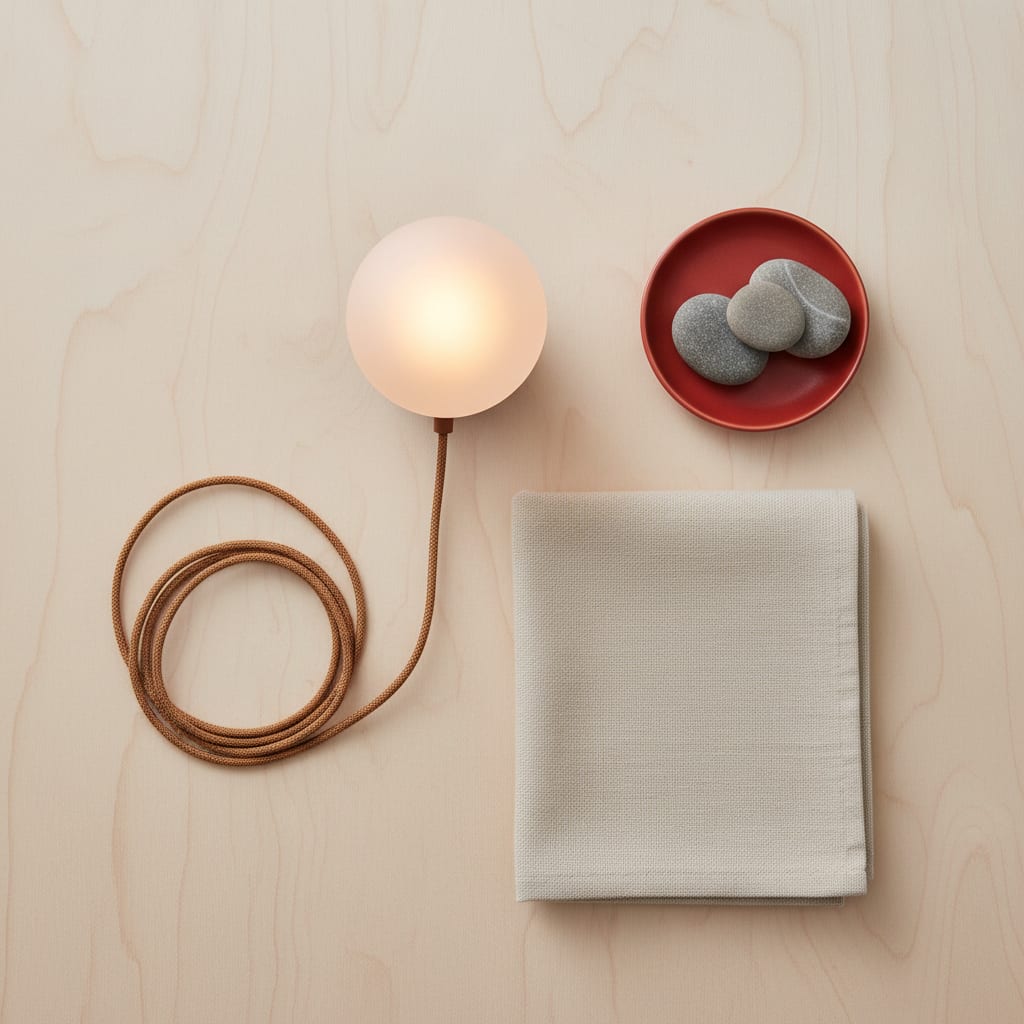
You can make an OK-to-wake light for free with a lamp and a plug-in outlet timer, the kind many families already own for holiday lights. Set the timer to switch the lamp on at your chosen wake time, then teach one rule: lamp off means it’s still night, so stay in bed; lamp on means morning. That’s the whole mechanism a dedicated toddler clock sells. A clock earns its price only when the free version breaks down: a child who switches the lamp on themselves, a lamp too bright for a light sleeper, or a child who needs an “almost morning” warning. Here’s how to set up the free one, and how to tell when it’s time to buy.
What an OK-to-wake clock actually does
Betteroo’s guide to introducing a toddler clock describes it as a clock that glows one color during sleep hours “and switches to another color, usually green, at the wake time you set.” The point is to give a child who can’t read numbers a signal they can see. Verified October 2026
Nothing in that needs a special gadget. A lamp that’s dark all night and comes on at 6:45 a.m. sends the same signal, and it shows you whether your child responds to a light cue at all before you spend anything.
The free version: a lamp, a timer and one rule
What you need:
- A lamp you already own. A small table lamp is fine. Put a warm LED bulb in it if you have one, because LEDs stay cool.
- A plug-in outlet timer. Mechanical dial timers are the kind sold for holiday lights and they’re common in garages and junk drawers. If you don’t have one, a basic one like the BN-LINK mini mechanical outlet timer is about the cheapest piece of sleep gear you can buy.
How to set it up:
- Plug the lamp into the timer, set it to switch on at wake time and off mid-morning, and leave the lamp’s own switch on.
- Pick a wake time your child can actually reach. Betteroo’s guide suggests starting with a realistic time “between 6:00 and 7:00 a.m.” for most young children, then moving it later in small steps if you want a later start.
- Teach the rule in daylight first, as a game: lamp off, pretend to sleep; lamp on, pop up and say good morning.
- Stay consistent. Don’t go in before the lamp comes on. Betteroo’s guide warns that going in early “even for a few extra minutes” teaches a child that the signal doesn’t really matter.
The age caveat. Under about three, Betteroo suggests a simpler goal: make sure the light is already on before you walk in, then point it out. The stay-in-bed rule works better from around three, when children know their colors. A clock doesn’t change that timeline either.
The colour rule
You don’t need a colour-changing bulb. The cue is the change from dark to light. Where colour does matter is anything that glows overnight. If your child needs a night light, keep it dim and red or amber rather than white or blue. Harvard Health’s advice is direct: “Use dim red lights for night lights. Red light is less likely to shift circadian rhythm and suppress melatonin.” It also notes that most table lamps are brighter than a night light. Verified October 2026 So the timer lamp stays off all night and never doubles as the night light. Betteroo’s explainer on which light colors are easiest on sleep has a bulb color-temperature table if you want a warmer bulb.
Make it safe before you make it clever
A lamp and a timer add a cord and a hot surface to a child’s room, so set it up the way the AAP sets up a nursery. Its HealthyChildren room-safety page says: “Don’t let strings or cords dangle in or anywhere near the crib,” and to keep night-lights “away from drapes or bedding where they could start a fire. Buy only cool night-lights that do not get hot.” Verified October 2026
In practice:
- Put the lamp across the room, out of reach of the crib or bed, on something it can’t be pulled off.
- Run the cord behind furniture so there’s nothing to grab or trip on.
- Use an LED bulb, which stays cool to the touch.
- Use a covered outlet if your child is at the age of poking things into sockets.
If you can’t place a lamp safely in your child’s room, skip the DIY version.
Where the free version breaks down
These are the problems that come up, and they’re the real reasons to buy a clock:
- Your child can switch the lamp on. Once a toddler learns that the switch makes morning happen, the rule is gone. A clock with a child lock fixes this.
- The lamp is too bright. A table lamp switching on at full brightness can wake a light sleeper by itself. Betteroo’s guide lists dimmable brightness as a feature worth having, “so the light itself does not become the thing waking your child.”
- No “almost morning” stage. A lamp is only off or on.
- The timer loses time. A plug-in timer doesn’t know about power cuts or clock changes. US clocks fall back on Sunday, November 1, 2026, when, per NIST, “the local time becomes 1 a.m.” at 2 a.m. Reset a mechanical timer that weekend, or the lamp will come on an hour off. Verified October 2026
When a dedicated clock earns its price
If the lamp test shows your child responds to a light cue but one of those problems keeps tripping you up, a dedicated clock is worth it. As a worked example, the LittleHippo Mella covers the gaps above. According to LittleHippo’s own product page, it “uses colors and facial expressions to teach bedtime and wake-up time.” Up to half an hour before wake time it “may display a playful expression and glow a yellow light,” which is the “almost morning” stage a lamp can’t give you. It also has a nap timer, a night light with adjustable brightness, and a sound machine. Verified October 2026
Buy one when:
- you’ve confirmed with the free version that a light cue works for your child;
- your child keeps switching the lamp on, or the lamp is too bright to be a gentle signal;
- you’d otherwise buy a separate sound machine and night light.
Skip it if the lamp already works.
If they still wake before the light
Neither version fixes biology. Betteroo’s guide is clear that if a child is “genuinely waking at 5:00 a.m. because of an early bedtime, a too-long or too-short nap, or a room full of morning light, the clock alone will not fix it.” Check the free fixes first: a darker room (my sleep-friendly nursery on a budget guide starts with a free blackout trick), and whether something outside is waking them at the same time each morning, like the garbage truck that wakes the baby. When your child wakes before the light, keep it brief: a quiet reminder to rest until it changes, then leave.

FAQ: DIY OK-to-wake lights
Can I use a regular lamp as an OK-to-wake light?
Yes. Plug it into an outlet timer set to switch on at wake time, and teach “lamp off, stay in bed; lamp on, it’s morning.” Keep it off overnight, out of reach, with a cool LED bulb.
What color should an OK-to-wake light be?
The morning signal can be any color, because the change from dark to light is the cue. Anything that glows overnight should be dim and red or amber. Harvard Health recommends dim red night lights because red light is less likely to suppress melatonin.
What age can a toddler use an OK-to-wake light?
You can start at almost any age, but under about three it works as a simple habit: the light is on when you come in. From around three, most children can follow the rule of staying in bed until it changes.
Is an OK-to-wake clock worth buying?
Only if the free version shows a light cue works and something gets in the way: a child who switches the lamp on, a lamp too bright for a light sleeper, or a need for an “almost morning” stage.